

The Hollow Empire

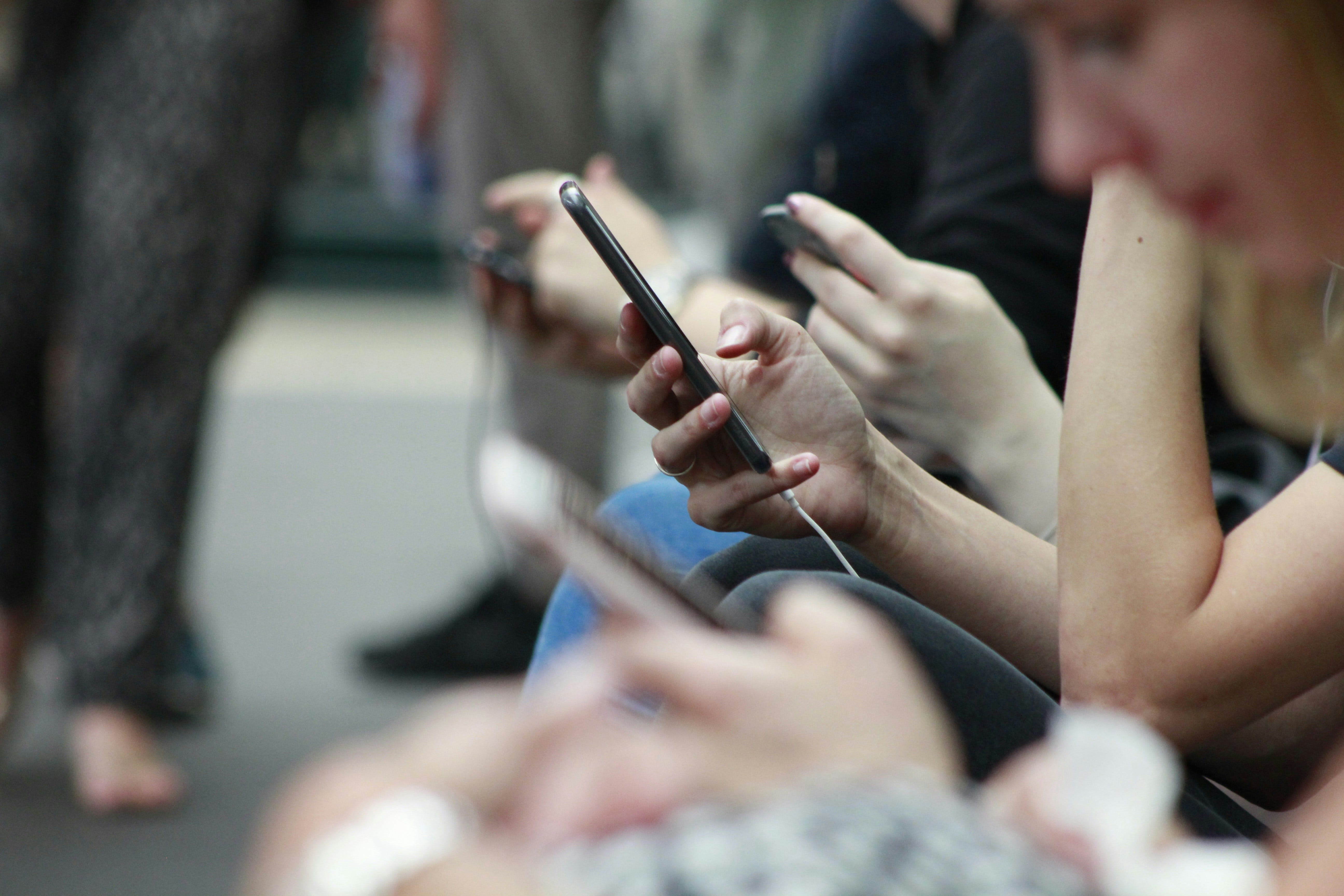
There’s a peculiar kind of betrayal that happens in slow motion, visible to everyone yet somehow unexpected when it finally registers. It’s the moment when someone you’ve followed for years—whose morning routines you’ve absorbed, whose recommendations you’ve trusted, whose struggles felt like your own—reveals that the entire relationship was always heading toward a transaction you never agreed to. This is the disillusionment at the heart of modern influencer culture: the gradual recognition that what presented itself as community, authenticity, and connection was actually a sophisticated sales funnel dressed in the language of friendship.
The original promise was revolutionary. Traditional gatekeepers suddenly had competition from regular people with smartphones and genuine expertise. Someone could build an audience discussing their passion without needing institutional approval. The appeal was authenticity—these voices showed their unmade beds, their struggles, their unfiltered reality. They responded to comments, remembered usernames, made audiences feel seen. For a while, many genuinely meant it. They were building communities around shared interests, creating content out of love for the subject matter. The audience wasn’t a resource to be extracted; it was the entire point.
Then came the monetization imperative, and with it a fundamental transformation. What began as passion became profession. What started as sharing became selling. This wouldn’t be problematic if it were transparent. We understand newspapers run advertisements and podcasts have sponsors. The contract is clear. But influencer culture operates differently—it trades on intimacy. The entire value proposition rests on perceived authenticity, on the feeling that you’re getting unfiltered access to someone’s real life and honest opinions. When that authenticity is systematically monetized, when every moment might be sponsored and every recommendation might be paid, the foundation corrodes.
Consider the case of Sarah, a bookstagrammer who built 200,000 followers sharing her genuine love of literary fiction from her studio apartment in Minneapolis. She posted dog-eared paperbacks from thrift stores, wrote thoughtful mini-essays about overlooked authors, created a genuine community of readers who trusted her taste. Then came the publisher partnerships. Within eighteen months, her feed transformed into an indistinguishable rotation of the same fifteen bestsellers every book influencer was being paid to promote—The Thursday Murder Club, whatever Colleen Hoover released that month, the latest celebrity memoir. The paperbacks disappeared, replaced by aesthetically arranged hardcover stacks she admitted in a vulnerable Story (itself a calculated performance) that she “didn’t have time to read anymore.” Her followers watched in real-time as someone who’d taught them to love reading became someone who taught them to buy books as decorative objects.
Or take James Chen, who built a following demystifying skincare ingredients, translating dermatological research into accessible advice that helped thousands of people solve actual skin problems while spending less money. His early videos explained why you didn’t need a twelve-step routine, why most “revolutionary” ingredients were repackaged basics, why the $200 serum and the $20 serum often contained identical active compounds. He was genuinely empowering. Then came the brand deals. Within a year, he was posting nearly identical enthusiastic reviews of luxury serums at $300 a bottle, each one “life-changing” until the next contract arrived. When followers pointed out the contradiction, he posted a defensive video about “building a business” and “evolving”—corporate euphemisms for selling out his educational mission for a Miami condo and a Tesla.
The travel creator Megan Walsh documented authentic adventures across Southeast Asia on a $30-a-day budget, showing followers how to navigate local transportation, find family-run guesthouses, eat spectacular street food. Her early videos were service journalism—genuinely useful information delivered with infectious enthusiasm. Then the tourism boards and luxury resorts discovered her. Now her feed is an interchangeable rotation of infinity pools at five-star properties in the Maldives, Santorini, and Bali—the exact same shots thousands of other travel influencers post because they’re all on the same press trips, staying at the same properties, producing content under the same partnership agreements. She’ll caption these posts with “finally taking time for myself” while on her ninth sponsored trip that quarter, performing exhaustion while living a life her followers couldn’t afford with years of savings. The advice that once helped people travel now makes them feel inadequate about the vacations they’re actually taking.
This pattern isn’t coincidental. It’s the inevitable result of a system that rewards growth above all else. You can’t get the brand deals with 5,000 engaged followers who trust you. You need 100,000, 500,000, a million. And you can’t get those numbers by serving a niche audience well—you have to flatten your content, chase trends, optimize for the algorithm. By the time you’re big enough to monetize significantly, you’ve already transformed into something unrecognizable from what your early followers valued. The system selects for people willing to make this trade, and it grinds down the ones who resist.
What makes this particularly insidious is the deliberate exploitation of parasocial relationships. These are one-sided connections where audiences feel they know someone intimately despite the relationship being fundamentally unequal and transactional. Influencers cultivate this feeling with practiced precision—sharing enough personal detail to create false intimacy, responding to enough comments to maintain the illusion of reciprocity, performing vulnerability while carefully managing what’s revealed.
Watch how it works: The influencer shares a “vulnerable” post about their anxiety, their relationship struggles, their body image issues. The audience responds with support, advice, their own stories. This creates a feeling of mutual exchange, of genuine connection. But the vulnerability is curated, calculated to generate engagement. The influencer isn’t actually seeking support—they’re creating content. They’ve learned that authenticity performs well, so they’ve industrialized it. Meanwhile, the audience member who shares their genuine struggle in the comments gets a heart emoji if they’re lucky, nothing if they’re not. The exchange isn’t reciprocal. It never was.
This manufactured closeness makes the audience uniquely susceptible to influence. When your “friend” recommends something, you trust it differently than an advertisement. You’re more likely to purchase products, more forgiving of ethical lapses, more willing to defend them in comment sections against critics. You’ve been psychologically groomed for conversion.
The audience begins to notice the patterns, but by then they’re invested. Every “life-changing” product is replaced by another life-changing product three months later. The enthusiastic endorsement of one brand is memory-holed when a competitor offers better terms. The person who positioned themselves as an everywoman now casually mentions home renovations, designer wardrobes, and international travel as if they’re universally accessible experiences. The performance of relatability continues even as the gulf between influencer and audience becomes a chasm.
This creates a strange cognitive dissonance for followers. They’ve invested time, emotional energy, and often money into this relationship. They’ve defended this person in comment sections, bought their recommended products, felt genuine happiness at their successes. Admitting the relationship was always transactional feels like admitting to being a fool. So many continue following, continue engaging, continue purchasing, even as their trust erodes and resentment builds. They’re trapped in a sunk cost fallacy, unable to walk away from something they’ve invested so much into. The influencer knows this. The platforms know this. Everyone profits from your inability to admit you’ve been had.
The influencers themselves often seem trapped too, though we should resist extending too much sympathy to people earning mid-six-figures by manipulating their audience’s trust. Still, they’re caught between the authentic person they once were and the personal brand they’ve become. They’re prisoners of the algorithm, required to produce constant content regardless of whether they have anything meaningful to say. They’re obligated to their sponsors, contractually bound to enthusiasm they may not feel. They’re hostages to their audience’s expectations, unable to evolve or change without risking their income.
Many seem genuinely exhausted, burnt out by the relentless demand to perform authenticity while managing an increasingly complex web of commercial relationships. But here’s the perverse twist: this exhaustion becomes part of the content too, monetized through sponsored wellness retreats and productivity apps. The travel influencer who’s “burnt out” from constant travel books a sponsored stay at a luxury wellness resort. The productivity influencer overwhelmed by their schedule partners with a meditation app. Even their suffering becomes product placement. There’s no escape from the machine because the machine has learned to monetize escape itself.
What’s particularly galling is how this system has colonized nearly every form of human expression and expertise. Genuine experts—people with decades of experience, formal education, and deep knowledge—find themselves competing with photogenic amateurs who’ve mastered engagement metrics. Dr. Rebecca Torres spent fifteen years studying environmental science, earned a PhD, published peer-reviewed research on climate change. Her YouTube channel explaining complex environmental systems has 40,000 subscribers. Meanwhile, a 22-year-old with no scientific background but great lighting and an engaging personality has 2 million followers posting oversimplified, often inaccurate “eco-tips” that serve her partnerships with greenwashing brands. The market has spoken: substance loses to style, nuance is crushed by the need for shareable soundbites, complex topics are compressed into digestible content that serves the algorithm rather than truth.
The corruption spreads beyond individual relationships into physical reality itself. Restaurants now design dishes primarily for Instagram—height, color contrast, “Instagrammability”—often at the expense of actual flavor. There’s a restaurant in Brooklyn that serves a $45 “rainbow bagel” that tastes like cardboard but photographs beautifully. It’s always packed. Destinations reshape themselves around photo opportunities rather than genuine experiences. The famous Bali swing wasn’t built by locals for locals—it was constructed specifically for influencer content, an artificial experience designed to look authentic. Museums now build “immersive” exhibits optimized for selfies rather than contemplation. Products are engineered for unboxing videos rather than utility—elaborate packaging that costs more than the product inside, designed to generate fifteen seconds of content before heading to a landfill.
Culture itself becomes homogenized into content, with every experience evaluated for its social media potential rather than its intrinsic worth. We don’t just visit places anymore—we collect visual proof that we visited places. We don’t just enjoy things—we perform enjoying things for an audience. The experience isn’t complete until it’s been documented, filtered, and posted. Reality becomes subordinate to its representation.
Meanwhile, the wealth concentration is staggering. The top 1% of influencers capture approximately 90% of the income while countless others hustle desperately for scraps, convinced that the next post, the next collaboration, the next viral moment will be their breakthrough. They’re encouraged to see themselves as entrepreneurs, as small business owners, as their own brand—language that obscures how thoroughly they’re exploited by platforms that extract enormous value from their labor while offering no security, no benefits, no stability.
Consider the actual economics: YouTube takes 45% of ad revenue. Instagram and TikTok pay essentially nothing directly, forcing creators to rely entirely on brand deals where they have minimal negotiating power. The platforms have successfully outsourced content creation to millions of unpaid or barely paid workers who bear all the risk while the platforms capture all the profit. When Instagram changes its algorithm overnight, thousands of creators watch their reach collapse and their income evaporate. They have no recourse, no union, no protection. They’re not employees, so they have no rights. They’re not contractors, so they have no contracts. They’re digital sharecroppers on platforms they don’t own, subject to the whims of opaque algorithms they can’t understand or appeal.
The psychological toll on both sides is mounting. A 2024 study found that 78% of full-time content creators reported symptoms of anxiety or depression, with 45% meeting clinical criteria for burnout. Audiences report feeling inadequate, manipulated, and cynical. The constant comparison, the manufactured authenticity, the transactional relationships disguised as genuine connection—it’s corrosive to everyone involved. We’re all diminished by a system that treats human attention as a resource to be mined and human relationships as opportunities for extraction.
And now we’re entering the final phase of this corruption, where even the thin veneer of human authenticity gets stripped away entirely. The technology already exists: AI-generated influencers indistinguishable from human creators. Not crude CGI models, but sophisticated synthetic personalities trained on millions of hours of successful influencer content. They’ll have the perfect lighting, the aspirational lifestyle, the practiced vulnerability, all algorithmically optimized for engagement. They’ll never get tired, never have an off day, never let the mask slip to reveal the commercial machinery beneath.
Companies are already building them. Lil Miquela has 3 million Instagram followers and has done deals with Prada and Calvin Klein. She’s not human. Nobody pretends she’s human, yet the engagement is real. Now imagine the next generation: AI influencers designed to be indistinguishable from human creators, with no disclosure required in many jurisdictions. They’ll respond to comments with machine-learned empathy, maintain perfect consistency across years of content, seamlessly integrate product placements into their generated reality.
The economics are irresistible. Why pay a human influencer $50,000 for a campaign when you can generate infinite content from an AI that never renegotiates, never has a scandal, never gets pregnant or sick or has a mental breakdown? The AI won’t develop a conscience about promoting products it doesn’t believe in. It won’t have moral qualms about targeting vulnerable audiences. It can run A/B tests on emotional manipulation in real-time, optimizing its vulnerability performance until it identifies the exact formula that maximizes conversion.
When authenticity becomes something that can be manufactured more efficiently by code than by humans, we’ll face the final collapse of the already strained relationship between reality and performance. The audience won’t just be connecting with someone who’s performing authenticity while managing commercial relationships—they’ll be connecting with an algorithm designed from inception to maximize emotional engagement and commercial conversion. The parasocial relationship won’t even have a human on the other end anymore, just a sophisticated extraction mechanism wrapped in the simulation of personality.
Human influencers will find themselves competing not just with each other but with entities that can be authentic more convincingly than any human ever could, because they’ll be trained on what authenticity looks like without ever needing to feel it. The last vestiges of genuine human connection in these spaces will be eliminated not because humans stopped trying but because machines will do it better, cheaper, and without the inconvenient limitations of human burnout or ethical hesitation. We’ll have achieved the perfect realization of the influencer economy’s logic: pure extraction without the messy inefficiency of actual human beings.
This isn’t science fiction. This is the next eighteen months.
So what do we do? The usual suggestions feel laughably inadequate. “Support creators directly!” Through which platform that doesn’t take a 30% cut? “Demand transparency!” From whom, and enforced by what mechanism? “Vote with your wallet!” In an economy where we’re all barely hanging on and free content subsidized by advertising is the only thing we can afford?
The fantasy solution involves creators embracing “radical transparency”—clearly stating not just sponsorships but the entire commercial architecture. “This video exists because Company X paid me $15,000, they had script approval on these three sentences, here’s what I actually think.” It means platforms redesigning algorithms to reward substance over engagement, which requires acknowledging their entire business model is fundamentally extractive and choosing to make less money. It means audiences developing sophisticated literacy about parasocial manipulation while continuing to engage with platforms designed by teams of PhDs to override exactly that kind of critical thinking.
In other words, it requires everyone involved to act against their immediate incentives simultaneously—creators leaving money on the table, platforms restructuring themselves into unprofitability, audiences paying directly for content they’ve been conditioned to expect for free. This is the collective action problem as written by Kafka.
The honest answer is that we’re not getting out of this. The influencer economy has revealed something fundamental about contemporary capitalism: its ability to identify anything authentic, anything communal, anything human, and systematically convert it into a product. The spaces that once felt like refuge from commercial bombardment are now the most thoroughly commercialized spaces of all, precisely because they don’t feel commercial. The advertisements that work best are the ones that don’t look like advertisements. The most effective salespeople are the ones who’ve convinced you they’re your friends.
We’ve built a system that takes human connection—arguably the most valuable thing we have—and turns it into an extractable resource. And we can’t unbuild it because too many people’s livelihoods now depend on it, too many platforms’ valuations rest on it, too much of our cultural infrastructure operates through it. The influencer who wants to quit can’t afford to. The audience member who wants to disengage can’t maintain social connections without these platforms. The platform that wanted to operate ethically would be immediately destroyed by competitors willing to be more extractive.
The machine has achieved a kind of perfect lock-in. We’re all stuck in it together: exhausted influencers performing authenticity they no longer feel, resentful audiences who can’t quite articulate why they feel manipulated, and platforms profiting enormously from the exploitation of both groups. The garbage isn’t the people—it’s the system that grinds up genuine human connection and spits out content, that transforms passion into product, that monetizes intimacy and calls it entrepreneurship.
And it’s about to get worse in ways that will make the current system look almost quaint. At least now there are still humans involved, with all their inconvenient limitations and occasional ethical hesitations. Soon even that will be optimized away.
We’re not scrolling through a feed anymore. We’re participating in the systematic conversion of everything human into capital, watching in real-time as the last spaces that felt authentic get colonized by the logic of extraction. And we can’t stop, because to stop is to be left behind, to lose connection, to become invisible in the only social infrastructure we have left.
This is what it looks like when capitalism achieves its final form—not through violent revolution but through the gentle, gradual transformation of every human interaction into a transaction, every relationship into a sales opportunity, every authentic impulse into a performance optimized for conversion.
There is no alternative because the alternative requires dismantling the entire architecture of digital capitalism, and none of us can afford to be the first one to stop participating.
So we keep scrolling, increasingly aware that something essential has been lost but unable to imagine a way forward, searching for something real in a landscape of performed authenticity, knowing that even this critique will be flattened into content, shared for engagement, and forgotten by tomorrow.
The hollow empire stands. We’re all subjects. And the borders are closing.
So I wanted to save this as a long read for the weekend, and I couldn't stop reading until the end. Wonderfully articulated. I feel like we're in the belly of a beast - a dying cockroach on its last breath flailing its legs in the air - and we mistake that for growth, action, progress. The binary of authenticity vs performance exists everywhere - from corporate 9 5 to creative entrepreneurship. The sacred is always defiled, it seems, and yet the sacred would not exist if we weren't defiled. So we must persist - for even that brief window of sacredness is worth it.
The bit on academic research vs influencer outreach especially resonated with me.