

The Queue
On waiting, wanting, and what we’re really lining up for

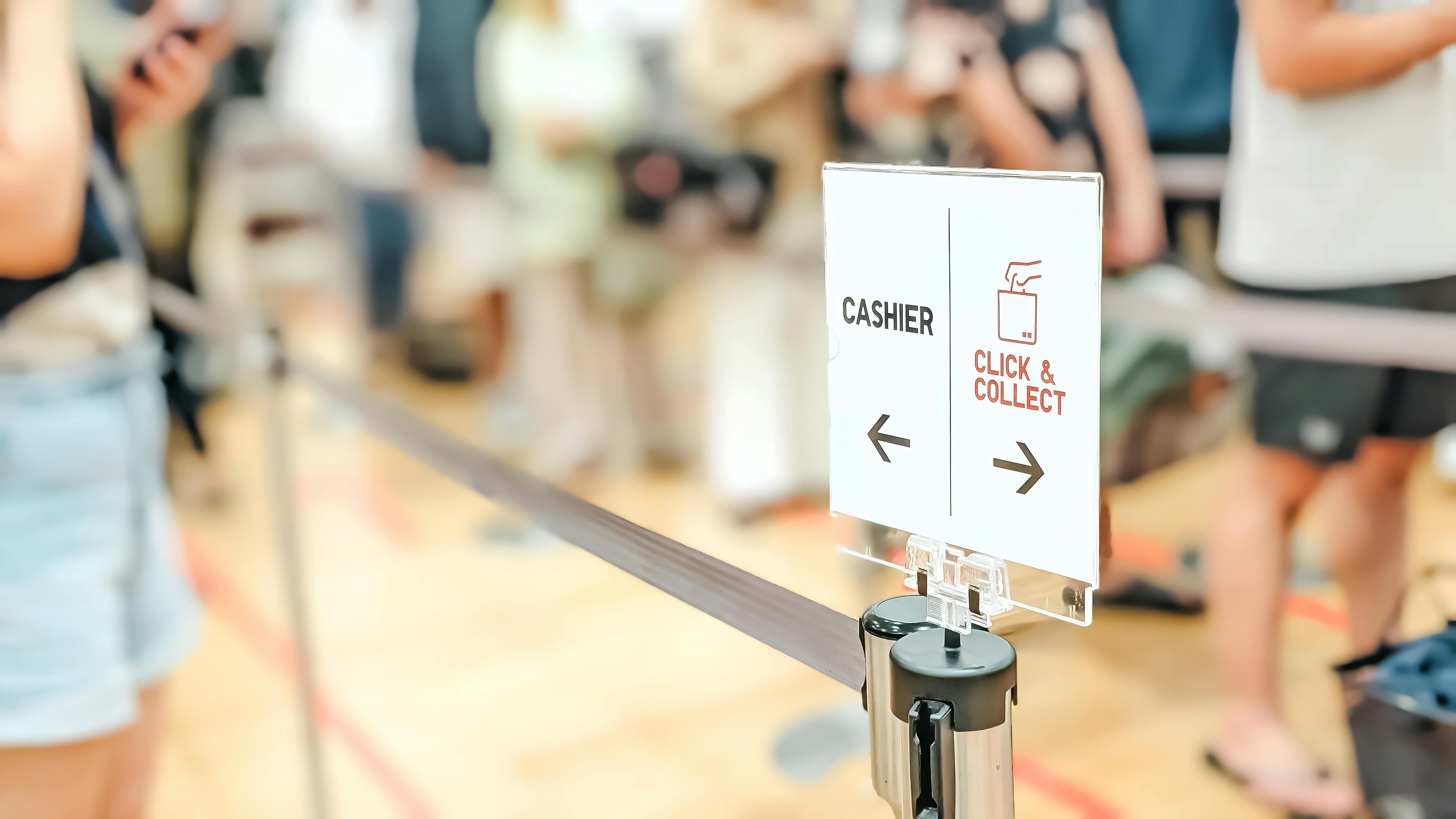
There is a particular kind of person who will stand outside a restaurant for forty-five minutes in uncomfortable shoes, on a Friday evening, after a full week of work, with perfectly reasonable alternatives a short walk away. You have seen this person. You may, on occasion, have been this person. The queue stretches down the pavement, past a shuttered pharmacy, past a man selling coconut water who has clearly made his peace with the irony. Nobody looks especially happy to be there. Nobody leaves.
This is worth thinking about.
The queue, as a social phenomenon, is not new. People have always waited for things they wanted — bread, trains, concerts, justice. But the restaurant queue as we now know it is a distinctly modern construction, and it carries a different kind of weight. It is not the queue of scarcity or necessity. It is, almost entirely, a queue of choice. And that changes everything about what it means.
When you choose to wait, you are making a statement — to yourself, to the people around you, to whoever eventually seats you. The statement is roughly this: I have decided this is worth it. Which is another way of saying: I have decided I am the kind of person for whom this is worth it. Identity is always somewhere in the equation. The restaurant you queue for says something about your taste, your income, your social fluency, your knowledge of what is currently considered good. The queue is a credential you earn with your time.
There is something almost medieval about this logic — the idea that suffering a little earns you the right to pleasure. That the wait confers legitimacy on the appetite. We have attached moral weight to patience in ways we rarely examine, and the queue is one of the places that weight becomes visible.
This would be fine, even harmless, if it stopped there. But it rarely does.
Social media changed the restaurant queue the way it changed most things — by collapsing the distance between desire and display. A dish is no longer just a dish. It is content. It is evidence. It is a small, shareable proof that you were present at the right place, in the right moment, among the right kind of people. The queue outside a famous restaurant is, among other things, a line of people waiting to produce that proof.
The queue is the first chapter. The meal, when it comes, is almost the epilogue.
There is a restaurant in London that has, for years, operated without reservations and maintained a queue that begins forming before noon for dinner service. The food is genuinely excellent. But the food alone does not explain the line. What explains the line is that the line is, itself, the story. To have waited, to have gotten in, to have eaten there — this is a narrative people want to own.
Restaurateurs understood this quickly, and some embraced it without apology. No reservations became a deliberate policy, not a logistical constraint. Scarcity, manufactured or otherwise, reads as quality. A restaurant that is always available begins to feel, however irrationally, like a restaurant that does not need to be. The queue, then, is also a kind of marketing — and the customers are doing it for free, with their bodies, every evening.
There is a certain genius to this, and a certain ruthlessness. The restaurant gets the buzz; the customer gets the story; the street gets the theatre. Everybody benefits, in some fashion. What gets lost in the transaction is harder to name — perhaps just the quiet pleasure of wanting something and simply having it, without the whole performance in between.
And yet. There is something in the queue that resists this entirely cynical reading.
Watch people in a long restaurant line and you will notice, usually after the first twenty minutes, a strange softening. Phones go down. Conversations start — with the group you came with, sometimes with strangers ahead or behind. There is a shared helplessness that becomes, unexpectedly, a shared ease. You have all surrendered to the same wait. Nobody is more important than anyone else here. The usual hierarchies of the city — of speed, of access, of who gets through which door first — have been temporarily suspended.
The queue is a great leveller in a way that the restaurant itself, once you are inside, often is not. Inside, the tables are priced differently. The corner booth is better than the one near the kitchen. The wine list has a register that excludes without saying so. But outside, on the pavement, you are all just waiting. The executive and the student and the couple who drove forty minutes to be here are all in the same line, in the same wind, checking their place in the same slow procession.
There is also the anticipation itself. Waiting for something you want is not the same as suffering for it. Psychologists have long noted that the pleasure of anticipation can rival, and sometimes exceed, the pleasure of the thing itself. You are hungry. The smell is probably reaching you already. You can see, through the glass, other people eating, and the food looks exactly as good as you hoped. This is a particular kind of pleasure — deferred, heightened, belonging entirely to the moment before. The queue gives you this for free, whether you asked for it or not.
There is a word in Portuguese — saudade — for a longing that is half pleasure, half ache. The queue, at its best, manufactures something like this. You want the thing. You do not yet have it. The gap between those two facts is not empty; it is full of something you will not quite be able to name later.
In Mumbai, the queue has its own texture.
It is different from the polite, resigned queues of colder cities. It is louder, more negotiated, occasionally contested. Someone will always know the owner. Someone else will always know someone who knows the owner. A table will materialise for them, and you will watch this happen with a mixture of irritation and admiration, because it is, in its way, a skill. The city runs on relationships, on the casual exercise of proximity, and the restaurant queue is no exception.
I have stood in enough of them to know that the Mumbai queue has moods. Outside Kyani & Co. on a weekday morning, it is quiet and purposeful — people who want what they want, and have been coming here long enough to know exactly what that is. Outside a new Bandra restaurant that opened six weeks ago and already commands a ninety-minute wait, it is louder, more performative, full of people photographing the facade before they have even eaten. Both are queues. They are not the same experience.
Mumbai is a city that moves at a velocity that makes stillness feel transgressive. To stand in a queue here is, quietly, an act of resistance.
What strikes me most, across both kinds, is how much they reveal about what we are hungry for beyond the food. Mumbai does not pause easily. It is a city built on forward motion — on the next train, the next deal, the next version of yourself you are trying to become. To stand in a queue, to accept that you will wait, to allow an hour to pass without productivity or motion — this is, for many people here, genuinely unusual. The queue forces a pause the city rarely offers voluntarily.
And into that pause, things come: conversation, observation, the strange pleasure of having nowhere else to be for a while. The person selling cigarettes nearby. The couple ahead of you having an argument that de-escalates into laughter by the time they reach the door. The child sitting on the kerb eating a vada pav with the serene focus of someone who has solved something you are still working on. The city, doing what it always does — offering you more than you came for, if you are willing to stand still long enough to receive it.
There is one more thing the queue does, which is perhaps the most quietly radical of all: it makes you commit.
We live in an era of infinite optionality. Every app is designed to keep you from fully choosing anything, because the moment you choose one thing, you are no longer available to choose another. Restaurants have a rating; there is always one rated slightly higher, slightly closer, slightly more on trend. The architecture of modern life discourages arrival. It rewards the perpetual browser, the person who is always weighing, always about to decide.
The queue breaks this. Once you are in it, you are in it. The decision has been made. The forty-five minutes you have already spent on the pavement become a reason to stay, not to leave. Behavioural economists call this the sunk cost fallacy; I prefer to think of it as the gift of having chosen something and standing by it. There is a relief in this that modern life rarely provides. You are here. You have decided. The rest will follow.
The restaurant, when you finally get to it, is almost secondary. What you have already had, in the hour before, is a kind of city — unmediated, unhurried, yours only because you stayed for it.
We queue, in the end, because wanting something and not yet having it is one of the few remaining experiences that the internet cannot accelerate. You cannot skip the queue. You cannot subscribe to a faster version of it. You cannot optimise your way out of it with the right plugin or the right connection — or not always, and not cleanly. You have to stand there, in your uncomfortable shoes, and let the time pass, and let the city do what it does to you.
And sometimes, by the time you sit down, you are not even sure the meal is the point. The meal is good. The meal may even be extraordinary. But the hour you spent on the pavement — that was something else. That was, unexpectedly, the part you will remember.
Next Friday, you will probably do it again.
So unique. Never thought about waiting in a queue like that.